## NOAI2025 Grid-Collage Image Classification
### Reference time to solve: 1 hour – 2 hours
### I. Overview
This task aims to design and train a highly robust deep neural network model to automatically determine whether an input image is a “grid-collage image” (宫格图). **A grid-collage image is a visual format that combines multiple images, or different regions of a single large image, into a unified “grid” effect through creative collage**. In scenarios such as social media, interaction design, and advertising campaigns, grid-collage images—thanks to their distinctive layout and visual impact—can significantly increase user attention, click-through rates, and conversion rates. The model is required to maintain high accuracy and strong generalization under various collage layouts (e.g., regular grids, free-form collages), as well as across different resolutions and compression qualities.
### II. Dataset
The dataset is collected from the internet and mainly contains product display images from two categories: women’s apparel and beauty/makeup.
- **Positive examples:** the input image is a grid-collage image
| Example 1 | Example 2 | Example 3 | Example 4 |
|--------|--------|--------|--------|
| 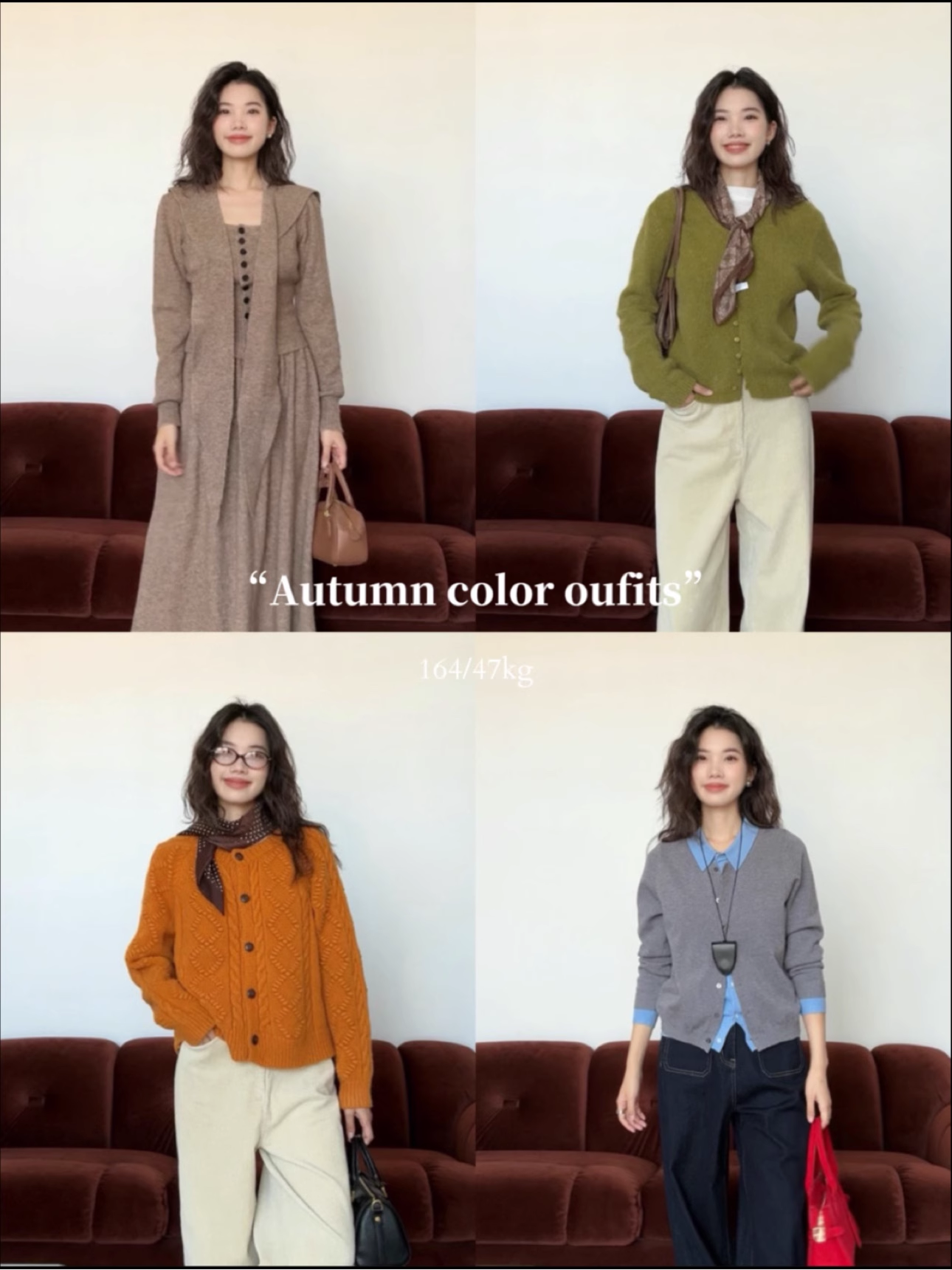 |
|  |
|  |
|  |
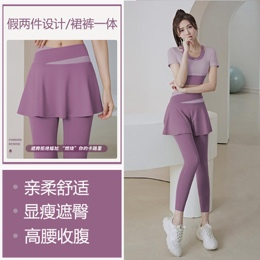
- **Negative examples:** the input image is NOT a grid-collage image
| Example 1 | Example 2 | Example 3 | Example 4 |
|--------|--------|--------|--------|
|
|
- **Negative examples:** the input image is NOT a grid-collage image
| Example 1 | Example 2 | Example 3 | Example 4 |
|--------|--------|--------|--------|
| 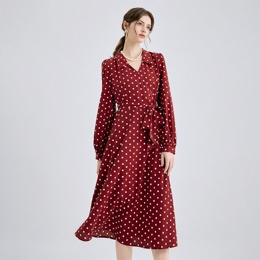 |
| 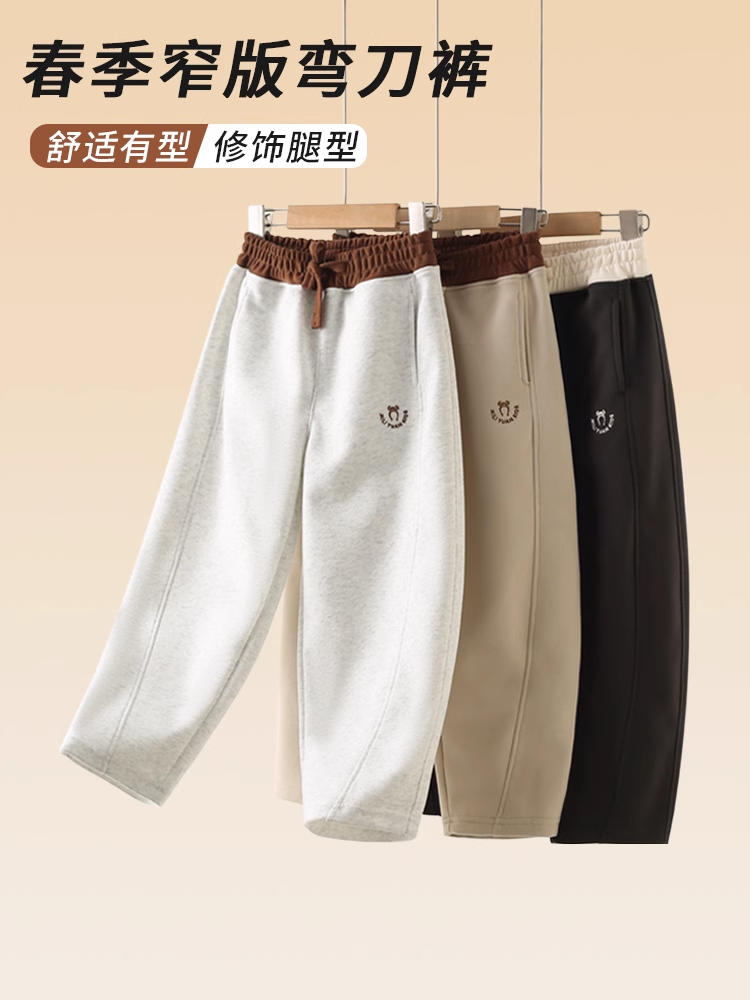 |
|  |
|  |
1. **Training set**
(1) Image properties: RGB, size 256×256
(2) Number of samples: 1000 images
(3) Training labels are stored in `train.csv` in the format: `[id, category (women’s apparel / beauty)]`
(4) The training set is provided at [training set link]() and is stored in the `data` folder.
2. **Validation set and test set**
The validation set and test set contain 100 images and 400 images, respectively. Their format and size are the same as the training set. The validation and test sets cannot be accessed directly; they must be read via encrypted environment variables. For details, please refer to [baseline.ipynb](https://www.bohrium.com/en/notebooks/31891812597).
### III. Task Requirements
This project aims to build a neural network model that can distinguish between grid-collage images and non-grid-collage images. Contestants should build a model using PyTorch and are free to design the network architecture, loss function, and optimizer. The ultimate goal is to determine whether an image is a grid-collage image.
**Hint: This is an unsupervised learning task. Although `train.csv` provides category information, the categories are “women’s apparel” or “beauty/makeup”, not whether the image is a grid-collage image. Therefore, the data is effectively unlabeled for the target task. Contestants need to use unsupervised learning methods in computer vision to let the model automatically distinguish grid-collage images using the training set; alternatively, if time permits, you may download the dataset, manually label it, and then train a supervised model—this is also a feasible approach.**
### IV. Submission
Contestants need to submit a notebook file named `submission.ipynb`. The notebook does not need to include training code. It should output a zip file named `submission.zip`, which must contain the following two files:
1. `submissionA.csv`: predicted labels on the validation set (`validation_set`), one 0 or 1 per line, no header; where 0 means non-grid-collage and 1 means grid-collage.
2. `submissionB.csv`: predicted labels on the test set (`testing_set`), one 0 or 1 per line, no header.
The system will read `submission.zip` and compute A-leaderboard and B-leaderboard scores based on the predictions and ground truth labels. The A-leaderboard score will be displayed during the competition to help contestants tune their models; the B-leaderboard score will not be displayed during the competition and will be used as the final evaluation. The submitted files must strictly follow the required format and naming; otherwise, the system will not be able to read them correctly. The code for the submission process can also be referenced in [baseline.ipynb]().
### V. Scoring Criteria
The scoring rule is to compare the submitted CSV files with `ground_truth_labels` to evaluate the predictive capability of the network.
The metric used is **Accuracy**, i.e., the number of correctly predicted samples divided by the total number of samples.
|
1. **Training set**
(1) Image properties: RGB, size 256×256
(2) Number of samples: 1000 images
(3) Training labels are stored in `train.csv` in the format: `[id, category (women’s apparel / beauty)]`
(4) The training set is provided at [training set link]() and is stored in the `data` folder.
2. **Validation set and test set**
The validation set and test set contain 100 images and 400 images, respectively. Their format and size are the same as the training set. The validation and test sets cannot be accessed directly; they must be read via encrypted environment variables. For details, please refer to [baseline.ipynb](https://www.bohrium.com/en/notebooks/31891812597).
### III. Task Requirements
This project aims to build a neural network model that can distinguish between grid-collage images and non-grid-collage images. Contestants should build a model using PyTorch and are free to design the network architecture, loss function, and optimizer. The ultimate goal is to determine whether an image is a grid-collage image.
**Hint: This is an unsupervised learning task. Although `train.csv` provides category information, the categories are “women’s apparel” or “beauty/makeup”, not whether the image is a grid-collage image. Therefore, the data is effectively unlabeled for the target task. Contestants need to use unsupervised learning methods in computer vision to let the model automatically distinguish grid-collage images using the training set; alternatively, if time permits, you may download the dataset, manually label it, and then train a supervised model—this is also a feasible approach.**
### IV. Submission
Contestants need to submit a notebook file named `submission.ipynb`. The notebook does not need to include training code. It should output a zip file named `submission.zip`, which must contain the following two files:
1. `submissionA.csv`: predicted labels on the validation set (`validation_set`), one 0 or 1 per line, no header; where 0 means non-grid-collage and 1 means grid-collage.
2. `submissionB.csv`: predicted labels on the test set (`testing_set`), one 0 or 1 per line, no header.
The system will read `submission.zip` and compute A-leaderboard and B-leaderboard scores based on the predictions and ground truth labels. The A-leaderboard score will be displayed during the competition to help contestants tune their models; the B-leaderboard score will not be displayed during the competition and will be used as the final evaluation. The submitted files must strictly follow the required format and naming; otherwise, the system will not be able to read them correctly. The code for the submission process can also be referenced in [baseline.ipynb]().
### V. Scoring Criteria
The scoring rule is to compare the submitted CSV files with `ground_truth_labels` to evaluate the predictive capability of the network.
The metric used is **Accuracy**, i.e., the number of correctly predicted samples divided by the total number of samples.